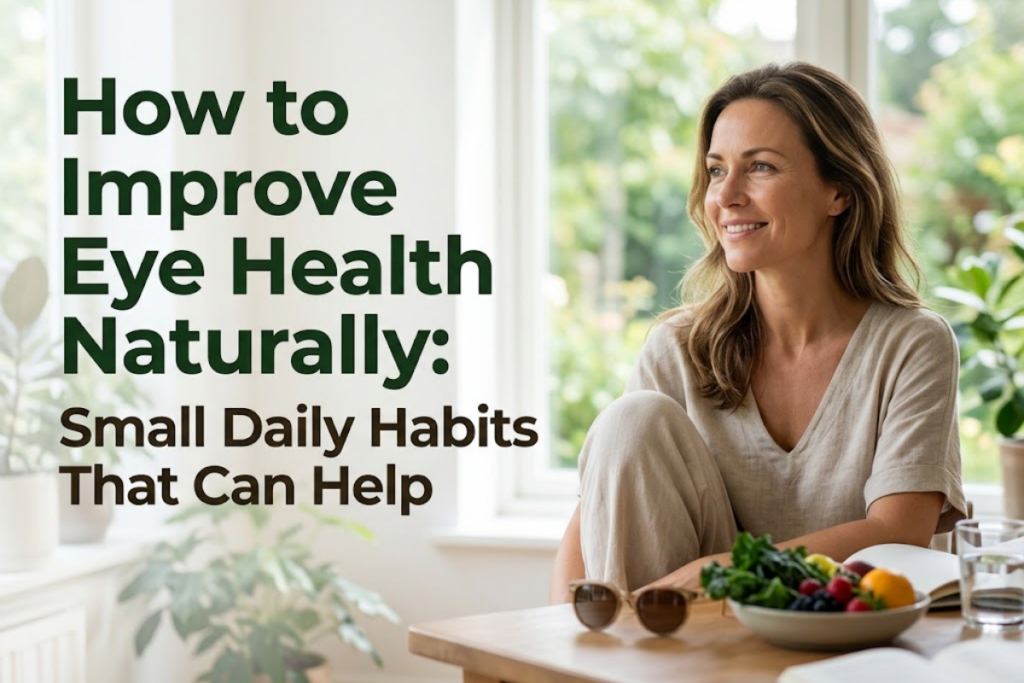
Our eyes help us experience the world, whether we are reading, working, driving, spending time outdoors, or connecting with friends and family. Taking care of them is an important part of maintaining overall health and quality of life.
Although lifestyle habits cannot prevent every eye condition, everyday choices can contribute to a practical eye-care routine. From eating a varied diet to protecting your eyes from sunlight and taking breaks from digital screens, small actions can make eye care a regular part of your day.
1. Give Your Eyes a Break From Screens
Computers, smartphones, and tablets are part of everyday life. However, looking at a screen for extended periods may contribute to eye fatigue, dryness, or discomfort.
Try the 20-20-20 approach: every 20 minutes, look at something approximately 20 feet away for at least 20 seconds.
You can also alternate screen-based tasks with activities that allow you to look around the room or focus on objects at different distances.
These brief breaks are easy to incorporate into a workday or study session.
2. Adjust Your Digital Environment
A few changes to your screen setup may make extended computer use more comfortable.
Consider the following:
- Adjust brightness to suit the surrounding light.
- Increase text size if reading feels difficult.
- Position your screen at a comfortable distance.
- Reduce reflections and glare.
- Keep screens clean.
- Take regular breaks from close-up work.
Remember to blink regularly while using digital devices. People often blink less frequently when concentrating on a screen, which can contribute to dry or uncomfortable eyes.
3. Wear Sunglasses With UV Protection
Sunlight contains ultraviolet radiation that can affect the eyes. Protecting your eyes outdoors is therefore a useful everyday habit.
Choose sunglasses that provide 100% UVA and UVB protection or are labeled UV400. A brimmed hat can provide additional protection.
Make sun protection part of your routine when walking, driving, gardening, exercising outdoors, or spending time at the beach.
4. Eat a Variety of Nutritious Foods
A balanced diet provides nutrients that contribute to normal bodily functions, including those involved in eye health.
Include a range of foods in your meals, such as:
- Leafy green vegetables
- Colorful fruits and vegetables
- Whole grains
- Beans and legumes
- Nuts and seeds
- Fish and other nutritious protein sources
Eating a variety of foods is more useful than relying on a single ingredient as a solution for eye health.
Aim for a balanced eating pattern that you can maintain over time.
5. Include Foods Rich in Healthy Fats
Healthy fats are part of a balanced diet. Fish such as salmon and sardines, along with walnuts, chia seeds, and flaxseeds, can contribute to a varied nutritional routine.
Fatty fish provide omega-3 fatty acids, while nuts and seeds offer other valuable nutrients.
You can include these foods in salads, breakfast dishes, and main meals according to your preferences.
Food choices should complement an overall balanced diet rather than be treated as a guaranteed way to improve eyesight.
6. Stay Physically Active
Regular movement is beneficial for general health and cardiovascular wellness, which are relevant to maintaining health throughout the body.
Choose activities that fit your lifestyle, including walking, cycling, swimming, dancing, or strength training.
You can begin with short sessions and gradually increase your activity as appropriate for your abilities.
A routine that you enjoy is often easier to maintain than one that feels difficult to fit into your day.
7. Make Quality Sleep a Priority
Sleep is an essential part of overall wellness. When you do not get enough rest, your eyes may feel tired or uncomfortable during the day.
Try to establish a consistent bedtime and wake-up schedule. Create a relaxing evening environment and give yourself enough time to sleep.
If you spend many hours using digital devices, reducing screen use before bed may also help you maintain a more regular sleep routine.
Persistent eye discomfort should not automatically be attributed to a lack of sleep.
8. Avoid Rubbing Your Eyes
Rubbing your eyes may feel relieving when they itch or feel tired, but repeated rubbing can irritate the delicate tissues around your eyes.
If you notice discomfort, pause and consider possible causes, such as dryness, allergies, or environmental irritation.
Wash your hands before touching the area around your eyes, and avoid rubbing them unnecessarily. If irritation continues, seek advice from an appropriate healthcare professional.
9. Practice Good Hand Hygiene
Clean hands are an important part of everyday eye care, particularly for people who wear contact lenses.
Wash your hands with soap and water before handling lenses or touching the area around your eyes.
Avoid sharing eye makeup, contact lenses, or lens-care products. Replace eye makeup according to the manufacturer’s instructions and avoid using products that are expired or contaminated.
These simple habits can help reduce avoidable sources of irritation and infection.
10. Follow Contact Lens Care Instructions
Contact lenses require proper handling, cleaning, and storage.
Follow the instructions provided by your eye-care professional and the lens manufacturer. Use the recommended contact lens solution, replace lenses on schedule, and never use water or saliva to clean them.
Avoid sleeping in contact lenses unless your eye-care professional has specifically approved that wearing schedule.
If you experience eye pain, redness, light sensitivity, or blurred vision while wearing contact lenses, remove them and seek prompt professional advice.
11. Maintain Healthy Hydration Habits
Drinking enough fluids is an important part of overall health. Keep water available during the day and drink regularly according to your individual needs.
However, frequent dry-eye symptoms can have several causes, including environmental conditions, medications, and certain health conditions. Drinking additional water alone may not resolve persistent dryness.
If your eyes frequently feel gritty, irritated, or uncomfortable, an eye-care professional can help identify appropriate options.
12. Use Comfortable Lighting for Reading and Work
Good lighting can make close-up activities more comfortable.
When reading, writing, sewing, or working at a desk, use lighting that allows you to see clearly without harsh reflections or direct glare.
Position lamps carefully and adjust your workspace so that light falls on the task rather than shining directly into your eyes.
If you regularly struggle to read or focus, consider arranging an eye examination rather than simply increasing the brightness of your surroundings.
13. Keep Up With Eye Examinations
Everyday habits are valuable, but they cannot replace professional eye care.
Comprehensive eye examinations can help identify certain eye conditions before noticeable symptoms develop. The appropriate examination schedule depends on your age, medical history, vision needs, and individual risk factors.
Follow the recommendations of your optometrist or ophthalmologist, even if your vision seems normal.
14. Recognize Changes That Need Attention
Pay attention to changes in your vision or eye comfort, especially when they are new or persistent.
Examples include:
- Ongoing blurred vision
- Persistent redness or irritation
- Eye pain
- New flashes of light or floaters
- Unusual sensitivity to light
- Difficulty seeing clearly
Sudden vision loss, a sudden increase in floaters or flashes, or severe eye pain requires urgent medical evaluation. Do not wait for lifestyle changes to resolve these symptoms.
Build a Simple Daily Eye-Care Routine
You can combine several healthy habits without making your schedule complicated.
Morning
- Eat a balanced breakfast.
- Prepare sunglasses before spending time outdoors.
- Begin the day with a comfortable screen setup.
During the day
- Take regular breaks from close-up work.
- Drink water throughout the day.
- Eat a varied, nutritious diet.
- Practice good hand hygiene.
- Move regularly and spend time outdoors with appropriate eye protection.
Evening
- Reduce prolonged screen use when practical.
- Follow your contact lens removal and care routine, if applicable.
- Make time for relaxation and adequate sleep.
Start with the habits that are easiest to maintain, then gradually add others that suit your lifestyle.
Natural Supplements to Explore
Some people consider dietary supplements when learning about nutrition and eye wellness. Whether a supplement is appropriate depends on individual nutritional needs, health circumstances, and the ingredients in the product.
If you are researching this category, review product ingredients, directions, and available evidence carefully. Some supplements are intended for specific populations or circumstances, and high doses of certain nutrients may be inappropriate for some people.
Products to explore:
Use verified product names and authorized links before publishing this section. Supplements should not replace prescribed treatment or recommended eye examinations. Consult a qualified healthcare professional before starting a supplement, particularly if you take medication or have an existing health condition.
A Balanced Approach to Eye Wellness
Eye care involves more than one food, product, or daily habit. A practical approach includes balanced nutrition, regular physical activity, adequate sleep, UV protection, good hygiene, and responsible screen use.
It also means recognizing when professional care is needed and keeping up with appropriate eye examinations.
Final Thoughts
Improving eye health naturally starts with small, practical choices. Take breaks from screens, wear sunglasses with UV protection, eat a varied diet, maintain good hygiene, and prioritize sleep and physical activity.
These habits can become part of a sustainable routine that complements professional eye care.
Choose a few changes that fit your daily life and build from there. Consistency, prevention, and attention to changes in your vision are important parts of caring for your eyes.
Explore Natural Wellness Options
Healthy habits, balanced nutrition, and lifestyle choices are important parts of overall wellness. Some people also explore natural supplements as part of their daily routines.
At NatureRemedyShop.com, you can discover supplement options across multiple wellness categories, including weight management, digestive wellness, energy support, beauty, joint care, and other areas of everyday health
👉Visit NatureRemedyShop.com to explore wellness products, compare available options, discover special offers, and learn more about supplements designed for different wellness goals.
Welcome!
Thank you for visiting NaturalSupplementWellness.com.
We’re delighted to have you here! Our mission is to provide educational information about natural supplements, wellness ingredients, and healthy living, helping you better understand the options available to support your wellness journey.
We hope you find our content informative and valuable as you explore natural wellness solutions.
If you found this article helpful, please consider sharing it so that more people can benefit from this information.
Thank you for trusting our content and being part of our community!
#EyeHealth #HealthyEyes #EyeCareTips #HealthyLifestyle #NaturalWellness