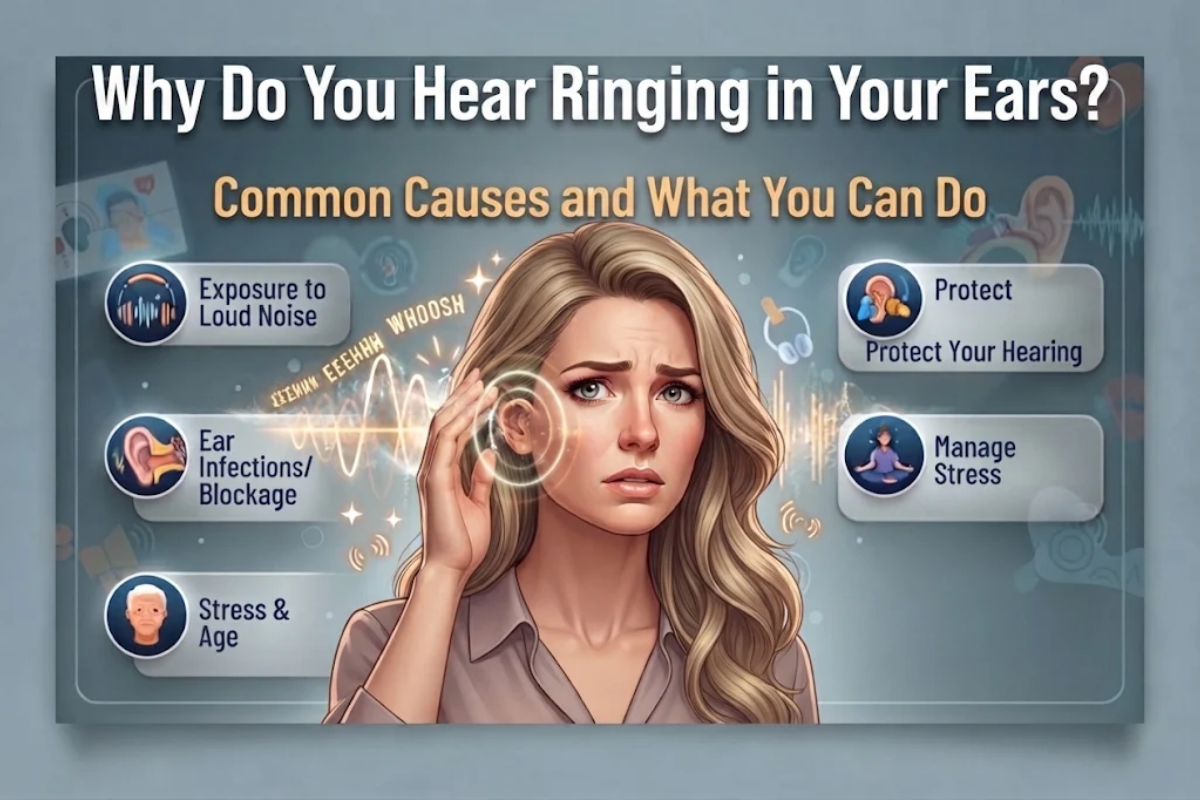
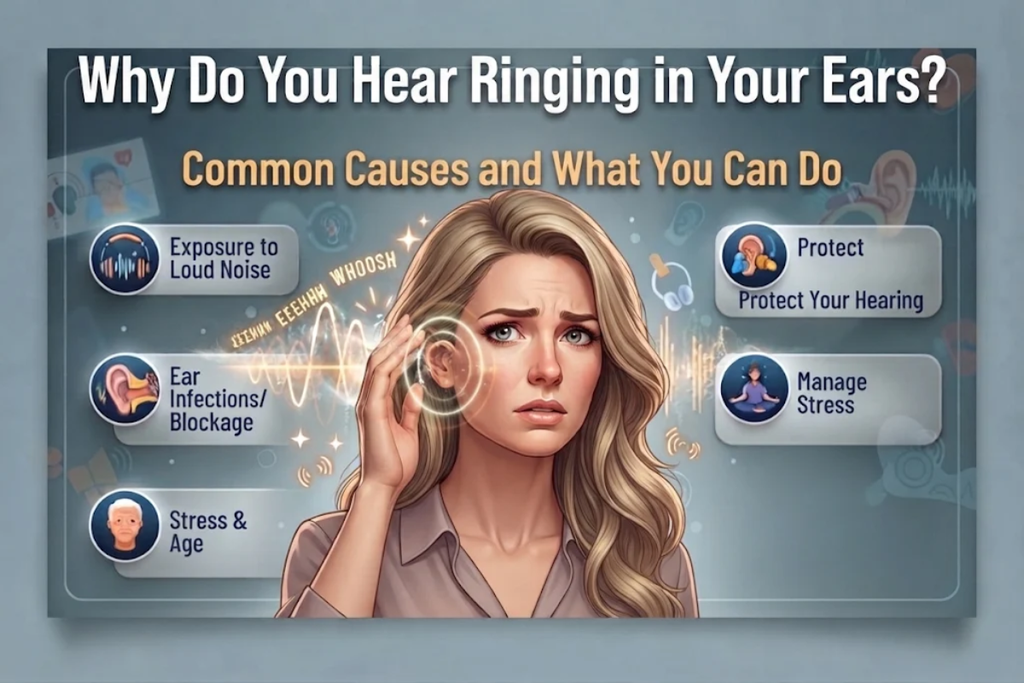
Have you ever noticed a ringing, buzzing, humming, or hissing sound when everything around you is quiet? This experience is known as tinnitus. It can affect one ear or both ears, and some people notice it only occasionally while others hear it more frequently.
Tinnitus is not a sound coming from the environment. It is a sound a person hears without an external source. Understanding its possible causes and learning practical ways to manage it can make the experience less confusing.
What Does Tinnitus Sound Like?
Tinnitus does not sound the same for everyone. People commonly describe it as:
- High-pitched ringing
- Buzzing or humming
- Hissing or whistling
- Whooshing sounds
- Pulsing or throbbing noises
- Static-like sounds
The sound may be constant or intermittent. It can also change in pitch, loudness, or intensity over time.
5 Common Reasons You May Experience Ringing in Your Ears
1. Exposure to Loud Noise
Loud music, machinery, power tools, and other intense sounds can affect the delicate structures involved in hearing. Some people notice temporary ringing after a concert or noisy event. Repeated or prolonged exposure can increase the risk of lasting hearing damage.
2. Hearing Changes Associated With Aging
Hearing can gradually change with age. Some people develop tinnitus alongside age-related hearing loss, even when the hearing changes are not immediately obvious.
3. Earwax Buildup
A buildup of earwax can block the ear canal and sometimes contribute to ringing or changes in hearing. A healthcare professional can check whether wax is causing the symptoms and advise on safe removal.
Avoid inserting cotton swabs or other objects deep into the ear canal.
4. Ear Infections and Other Ear Conditions
Some ear infections and conditions affecting the inner ear can be associated with tinnitus. Other symptoms may include ear discomfort, pressure, dizziness, or changes in hearing.
5. Certain Medications and Health Conditions
Tinnitus can sometimes be associated with certain medications or underlying health conditions. If ringing begins after starting a medicine or changing its dose, discuss it with a healthcare professional. Do not stop prescribed medication on your own.
6 Practical Ways to Cope With Ringing in Your Ears
1. Protect Your Ears From Loud Sounds
Use properly fitted hearing protection in noisy environments. Keep a comfortable distance from loudspeakers and machinery, and take breaks from intense noise.
2. Use Gentle Background Sounds
Complete silence can make tinnitus more noticeable for some people. Soft background sounds, such as a fan, gentle rain, or quiet instrumental music, may help make the ringing less distracting.
3. Create a Relaxing Bedtime Routine
If tinnitus becomes more noticeable at night, try a consistent sleep schedule, a comfortable bedroom environment, and a calming routine before bed.
4. Manage Everyday Stress
Stress can make tinnitus more difficult to cope with. Gentle physical activity, breathing exercises, and relaxing hobbies may help reduce tension and improve daily well-being.
5. Avoid Focusing on the Sound All Day
Staying engaged in enjoyable activities, conversations, and hobbies can help shift attention away from tinnitus. This does not remove the sound, but it may make it less intrusive.
6. Arrange a Hearing Assessment
If ringing happens regularly, persists, gets worse, or affects sleep and concentration, arrange an evaluation with a qualified healthcare professional or hearing specialist. They can check your ears, assess your hearing, and discuss appropriate management options.
When Should You Seek Medical Attention?
Some tinnitus symptoms need prompt attention.
- Sudden hearing loss: Seek urgent medical assessment, particularly when it develops over hours or a few days.
- Ringing with severe dizziness or facial weakness: Seek emergency medical care.
- Ringing that follows a head injury: Get immediate medical attention.
- Sound that beats in time with your pulse: Arrange prompt medical evaluation.
- Persistent or worsening tinnitus: Have your hearing and ears assessed.
These symptoms should not be ignored, because some causes require timely evaluation.
Final Thoughts
Ringing in the ears can have several possible causes, and the experience is different for each person. Protecting your hearing, using gentle background sounds, maintaining healthy daily routines, and seeking an assessment when symptoms persist are practical steps worth considering.
Understanding tinnitus is a useful first step toward making informed decisions about your hearing health and everyday well-being.
Explore Natural Supplements for Hearing Wellness
We offer a selection of natural supplements featuring different ingredients that may interest people exploring hearing and overall wellness. Their names are listed below. Click on the products to visit their official websites, explore their formulas, and learn more about each option.
- Quietum Plus → Official Website
- Audifort → Official Website
- Zeneara → Official Website
- ZenCortex → Official Website
- NeuroQuiet → Official Website
👉Visit NatureRemedyShop.com, our exclusive offers site, to explore deals on natural supplements, check available discounts, compare package options, discover products in different wellness categories, and see current promotions, bonus offers, shipping options, and manufacturer guarantees on selected products.
Welcome!
Thank you for visiting NaturalSupplementWellness.com.
We’re delighted to have you here! Our mission is to provide educational information about natural supplements, wellness ingredients, and healthy living, helping you better understand the options available to support your wellness journey.
We hope you find our content informative and valuable as you explore natural wellness solutions.
If you found this article helpful, please consider sharing it so that more people can benefit from this information.
Thank you for trusting our content and being part of our community!
#Tinnitus #RingingInEars #EarHealth #HearingHealth #TinnitusAwareness #BuzzingInEars #HearingWellness #HealthyHearing #EarCare #NaturalSupplementWellness